
The Hidden Gap: Consultants Learn Skills in Isolation. Athletes Learn Through Routines
How to gain greater creativity and show value in consulting

QUOTE
“If you want athletes to use mental skills, teach them where they already live. Inside their routines.”
OBSERVATION
One of the biggest gaps in our field is how we teach consultants to deliver mental performance training. Most are taught:
theories in isolation,
mental skills in isolation,
and interventions in isolation.
But when they step into real sport environments, they discover something important:
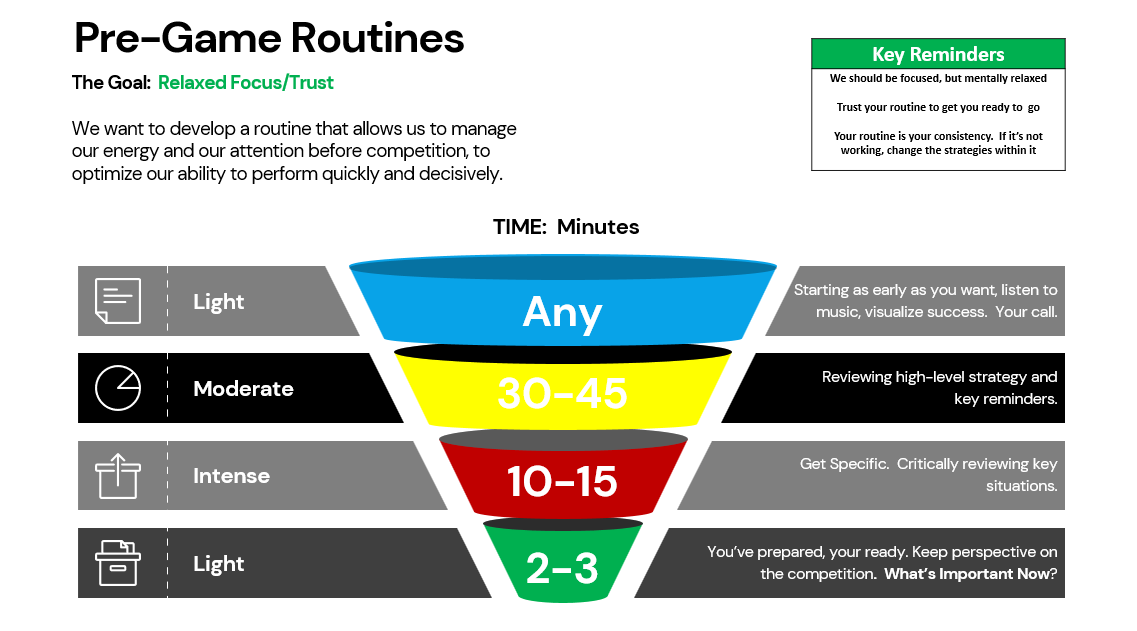
Athletes don’t operate in isolation, they operate through routines.
Pre-practice warm-ups.
Technical drills.
Pre-shot processes.
In-game resets.
Film study habits.
And more
These routines are already baked into the culture of their sport. Every practice repetition and most competition scenarios are routines. They’re familiar, repeatable, and stable, which is exactly what you need for skill application. The problem is that most consultants try to add mental skills on top of what the athlete is already doing instead of embedding skills inside the structures the athlete already uses.
This is why mental skills often feel “extra” or “nice to have.”
Not because the skill is wrong, but because the delivery doesn’t match the athlete’s lived environment.
If we want consultants to be more effective, they need to stop thinking:
“How do I teach this mental skill in a general way…”
And start thinking:
“What routine is this athlete already engaging in that highlights a mental skill opportunity?”
That shift alone turns theory into application, and application into something an athlete can actually repeat under pressure more easily.
ACTIONABLE IDEA
Start With the Routine, Not the Skill
This week, take one athlete (or coach) you’re working with and run this simple three-step process:
1. Identify one routine the athlete already uses.
Pick something specific and repeatable, such as:
pre-practice prep
pre-shot routine
between-play reset
serving routine
bullpen warm-up
film-study workflow
Don’t create something new. Start where they already are.
2. Ask: “What is the mental demand inside this routine?”
Examples:
focus during setup
emotional control after a mistake
confidence entering the rep
clarity of intention before execution
recovery between efforts
This anchors the skill to real context.
3. Embed one mental skill directly into that routine.
Keep it extremely simple such as one cue, one breath, one intention.
Examples:
A single focus cue before the rep
A reset breath after the mistake
A short intention phrase before movement
A 10-second reflection at the end of the drill
A self-evaluation question during film study
The power here isn’t the skill itself, it’s the placement.
When consultants learn to embed skills inside existing routines, everything changes. This is where better consulting begins. Not with more skills, but with smarter routines.

Want more clarity in your work? Check out the support options at the mental performance institute.
Join a community of practice where we talk through real applied work needs with hands on practical training. Less theory, more practice.
Flexible, monthly individualized development plans
Take home Toolkits
CMPC Mentorship
Great Blog!!! Love it!